
Freya Vogel · 5 September 2026
Tenora Artisans Experiment with Alternative Woods to Combat Material Shortages
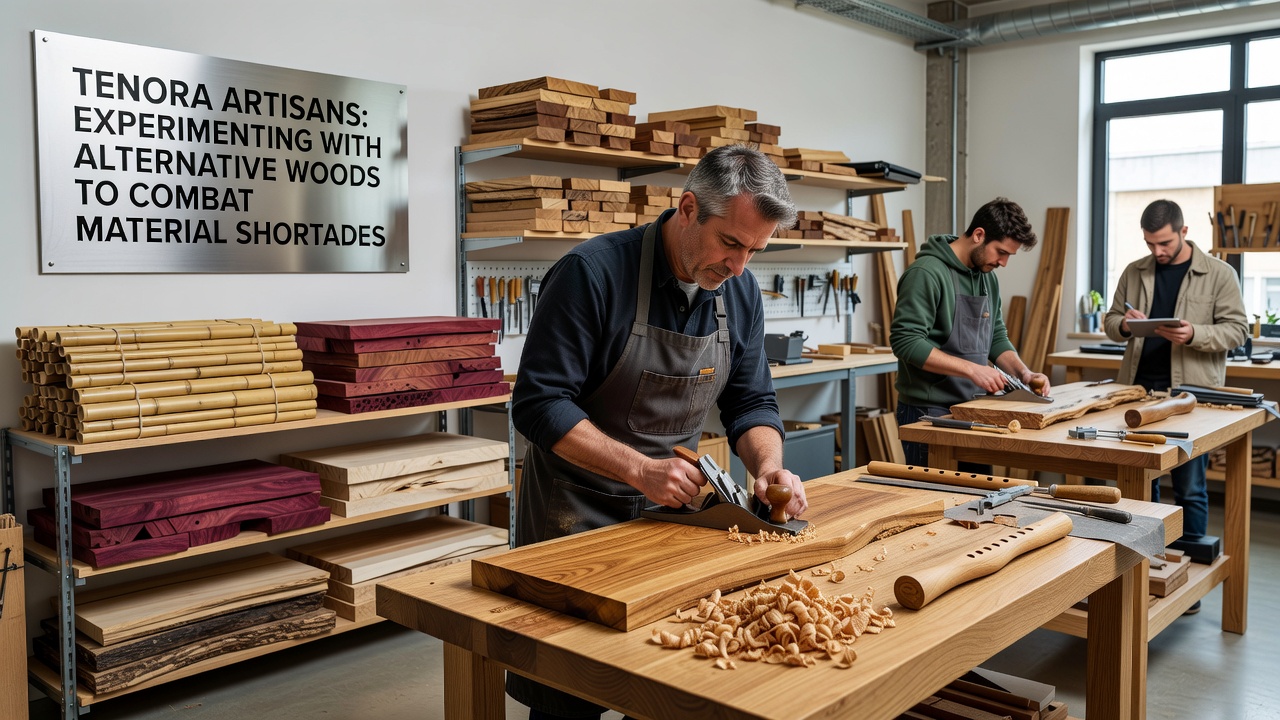
Artisans across Catalonia have turned to alternative wood species as supplies of traditional materials like African ebony and Brazilian rosewood continue to tighten under international trade regulations, and this experimentation has accelerated in workshops from Barcelona to the Pyrenees foothills since early 2025. The tenora, a double-reed woodwind central to cobla ensembles, relies on dense hardwoods that provide specific acoustic properties, yet CITES listings and sustainable forestry mandates have restricted access to those species. Makers now test local European hardwoods and plantation-grown options while tracking changes in tone, durability, and resonance during extended playing sessions.
Drivers Behind the Wood Supply Shift
Export quotas from source countries tightened further after 2023 updates to the EU Timber Regulation, and figures from the European Commission show a 28 percent drop in licensed shipments of Dalbergia and Diospyros species into Spain between 2022 and 2025. Tenora builders report that remaining stocks often carry higher costs and longer lead times, prompting several workshops to maintain smaller inventories and prioritize rapid prototyping with substitutes. Researchers at the Universitat de Barcelona’s acoustics laboratory have documented how density and grain structure affect vibration transfer in the instrument’s bore, and those measurements guide selections of alternatives such as European maple, cherry, and sustainably harvested sipo from managed African plantations.
One cooperative in Vic began trials with Spanish-grown walnut in late 2024, and initial results indicated comparable low-end response when the bore profile received minor adjustments. The group shared data with colleagues in Girona who simultaneously tested ash and plane wood, noting that ash offered brighter upper partials while plane produced a warmer midrange. These side-by-side comparisons continue through joint recording sessions that capture frequency spectra under controlled humidity conditions.
September 2026 Presentations and Field Tests
Plans are underway for a public demonstration series in September 2026 at the annual music instrument fair in Perpignan, where makers will present tenoras built from five different wood combinations. The event will include blind listening panels composed of professional cobla players who evaluate projection and timbre without knowing the material identities. Organizers expect participation from at least twelve workshops, and preliminary registration data indicates that three Catalan conservatories have already committed student ensembles to perform comparison pieces.
Parallel field tests scheduled for summer 2026 will place prototype instruments in outdoor sardana performances across multiple towns, and humidity fluctuations in those settings provide additional data on dimensional stability. Makers have applied thin oil finishes and adjusted tenon tolerances to counteract seasonal movement, and early reports note that cherry maintains bore dimensions more consistently than walnut under rapid temperature changes. The trials also track reed response and key mechanism wear, since denser substitutes sometimes require different pad seating pressures.
Acoustic Data and Maker Adjustments
Acoustic measurements collected at the Barcelona laboratory reveal that maple tenoras exhibit a slightly faster attack in the lower register compared with traditional ebony models, yet overall harmonic balance remains within acceptable ranges once wall thickness is reduced by 0.8 millimeters in the lower joint. Artisans compensate by modifying teh staple geometry and experimenting with synthetic resin reinforcements at stress points. These modifications appear in instruments already delivered to several municipal bands in the Empordà region, where players report stable intonation across a full season of weekly rehearsals.
Trade associations in France and Italy have expressed interest in similar substitution protocols, and a joint working group formed in March 2025 now exchanges bore drawings and finish recipes. Data shared through that network includes moisture-content logs and long-term crack incidence rates, which help identify which species require additional seasoning cycles before final machining.
Supply Chain Adaptations
Local sawmills in the Catalan interior have increased production of certified European hardwoods, and several tenora makers have signed multi-year contracts that guarantee kiln-dried stock meeting specific density thresholds. These agreements reduce reliance on overseas shipments while supporting regional forestry management plans that emphasize selective harvesting. Workshops also explore laminated construction techniques that combine a resonant inner bore with a more stable outer layer, and prototypes assembled in early 2026 demonstrated reduced cracking during seasonal humidity swings from 35 to 75 percent.
Conclusion
Continued documentation of performance metrics and material behavior will shape the next generation of tenora designs, and the September 2026 presentations will supply the broader community with comparative listening evidence. Makers maintain detailed records of each prototype’s construction parameters and player feedback, creating a growing database that supports evidence-based decisions rather than trial-and-error approaches. As regulatory frameworks evolve, the sector’s focus on documented acoustic outcomes and sustainable sourcing provides a practical model for other traditional instrument traditions facing similar resource constraints.