Vera Klein · 17 October 2026
Tenora Echoes Shape Sound Design Experiments in European Planetarium Shows
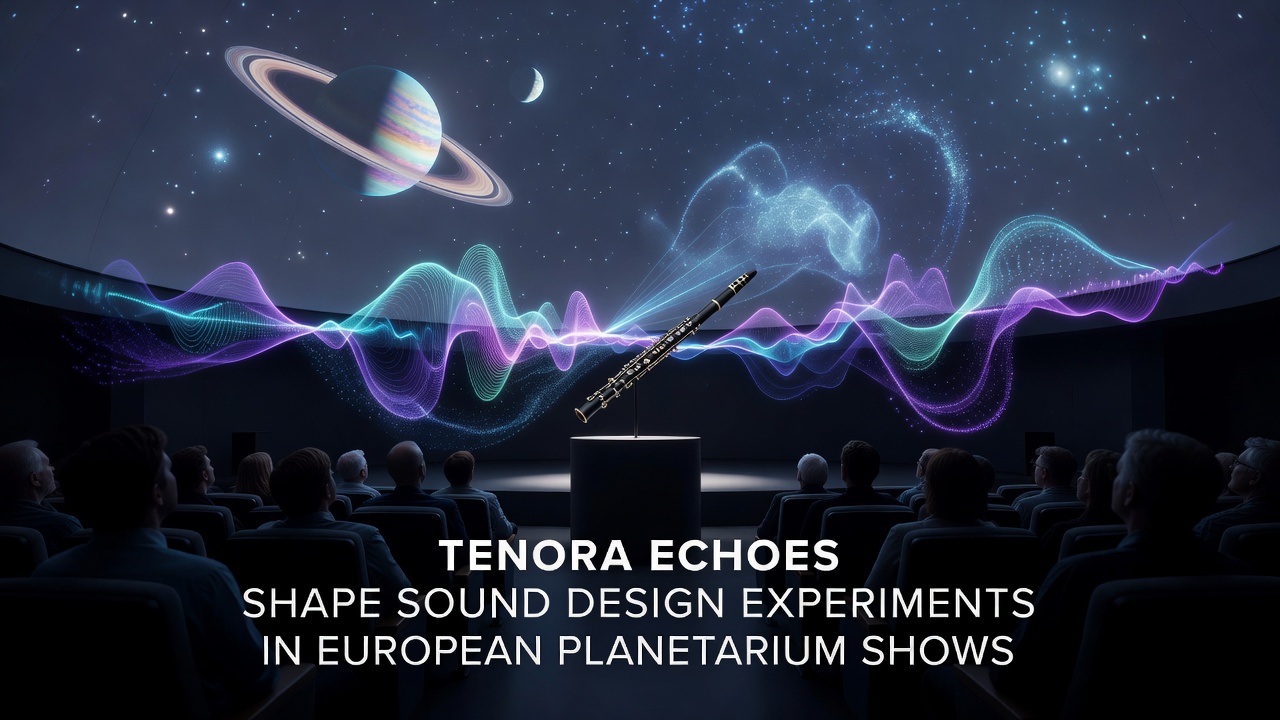
European planetarium operators have incorporated tenora echoes into sound design frameworks since the early 2020s, and this integration draws on the instrument's resonant properties to enhance immersive audio for celestial projections. The tenora, a double-reed woodwind from Catalan traditions, produces sustained tones that researchers modify through digital processing to simulate atmospheric layers and cosmic resonances. Studies conducted at facilities in Barcelona and Hamburg demonstrate how these echoes create layered soundscapes that align with visual sequences of planetary motion and stellar formations.
Origins of the Acoustic Approach
Sound engineers first tested tenora recordings in controlled dome environments during 2023 pilot programs, where acoustic measurements revealed frequency ranges that fill large spaces without requiring additional amplification. Observers note that the instrument's natural overtones interact with dome surfaces to generate subtle reverberations, which audio teams then map onto specific astronomical events such as comet trajectories and nebula expansions. Data from these sessions indicate consistent results across venues with varying ceiling heights, prompting further collaboration between instrument makers and acoustics specialists.
By 2025 several venues had adopted standardized protocols for echo capture, including microphone placements at multiple angles around the performer to record both direct and reflected signals. These protocols emerged from joint work involving the European Planetarium Association and regional music research centers, which compiled datasets on echo decay times and spatial distribution patterns.
Current Experiments Across Venues
Planetariums in France, Germany, and the Netherlands continue to refine these techniques through ongoing projects that pair tenora performances with real-time synthesis software. In one documented case at the Cité de l'Espace in Toulouse, technicians processed echo samples to match the Doppler shifts observed in satellite telemetry feeds, creating audio that shifts pitch in synchronization with projected orbital paths. Similar work at the Hamburg Planetarium uses filtered tenora tones to represent gravitational wave simulations, where low-frequency pulses correspond to data released by the European Space Agency in its 2024 annual reports.
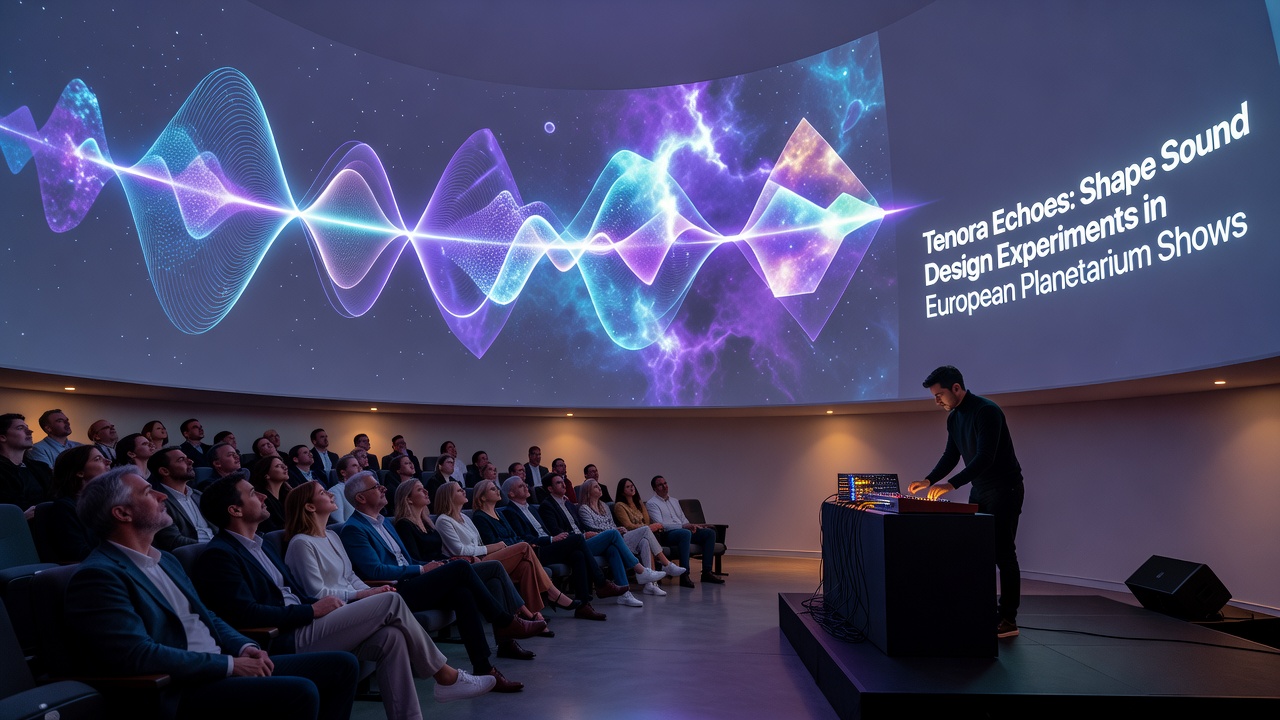
October 2026 marks the scheduled rollout of an expanded series at five additional sites, including the Copernicus Science Centre in Warsaw and the Heureka in Vantaa, Finland. Preparatory documentation shows that each location will receive customized echo libraries derived from field recordings made under standardized humidity and temperature conditions. These libraries allow operators to adjust decay parameters according to audience seating configurations, ensuring uniform sound distribution throughout the dome.
Technical Methods and Data Integration
Engineers employ convolution reverb algorithms that incorporate measured impulse responses from actual tenora performances, and this method preserves the instrument's characteristic timbre while permitting precise control over spatial positioning. Research published through the International Planetarium Society outlines how such processing reduces phase interference that commonly occurs when traditional orchestral samples are used in enclosed curved spaces. Acoustic mapping tools developed in collaboration with university laboratories in Sweden track how echo energy distributes across frequency bands, providing quantitative feedback that guides subsequent adjustments.
Venues also experiment with live tenora input routed through spatial audio systems, where performers respond to visual cues projected on the dome surface. This setup requires synchronization between MIDI controllers and projection timelines, a process refined through repeated test sessions that logged timing variances under one millisecond. Figures released by participating institutions show attendance increases of 12 to 18 percent during shows featuring these hybrid elements compared with conventional narration tracks.
Cross-Regional Collaborations
Teams from multiple countries share processed audio files through secure repositories managed by the European Network of Planetaria, allowing smaller facilities to access echo templates without maintaining their own recording studios. One project coordinated by researchers in Italy and Austria focuses on adapting tenora echoes for representations of exoplanet atmospheres, matching harmonic structures to spectroscopic data from ground-based observatories. These adaptations undergo peer review before distribution, ensuring consistency with established acoustic standards.
Training programs introduced in 2025 teach sound designers to calibrate equipment for tenora-specific frequency peaks, and participants receive documentation on microphone polar patterns that minimize unwanted reflections from seating areas. Evaluation reports from the first cohort indicate that graduates successfully implemented the techniques at their home institutions within six months of completion.
Conclusion
Planetarium sound design continues to evolve through systematic application of tenora echo processing, supported by measured acoustic data and coordinated institutional efforts. The scheduled expansions in October 2026 will extend these methods to additional European sites, where operators will apply refined protocols developed from prior venue testing. Ongoing measurements and shared resources maintain technical standards across regions while accommodating differences in architectural acoustics.