Sofia Flores · 19 September 2026
Tenora Reed Cultivation Practices Evolve in Catalan Farms Through Climate Adaptation Studies
Tenora reeds, derived primarily from Arundo donax stands across Catalan agricultural zones, have seen cultivation methods shift in response to documented changes in Mediterranean weather patterns, and researchers at regional institutions have tracked these adjustments through multi-year field trials that began intensifying around 2022. Farms in the Empordà and Vallès regions report modifications to planting densities, water management schedules, and soil amendment techniques, all informed by data collected on temperature fluctuations and precipitation variability. These changes address reduced stalk height and altered fiber density that have appeared in harvest records since the mid-2010s.
Historical Context of Reed Sourcing in Catalonia
Traditional tenora reed production relied on wild and semi-managed stands along riverbanks and irrigation channels, where consistent humidity supported steady growth cycles, yet rising average temperatures have compressed the optimal harvest window from late autumn into a narrower period that now overlaps with earlier seasonal dry spells. Agricultural cooperatives in Girona province began compiling yield statistics in 2018, and those records show a 12 to 18 percent decline in usable reed length per stalk during years when spring rainfall fell below 250 millimeters. Local agronomists responded by mapping microclimates within existing farm plots, identifying zones where morning fog still provides supplemental moisture even as overall regional rainfall decreases.
Key Findings from Adaptation Research
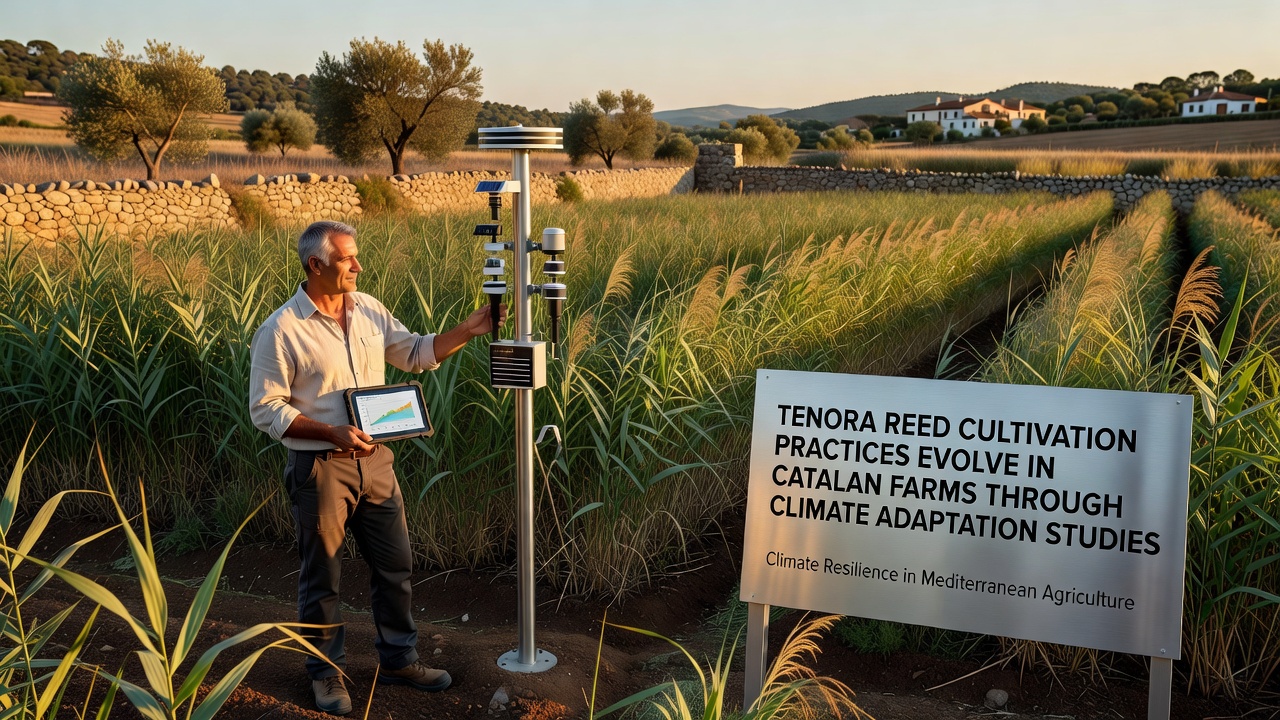
Climate adaptation studies conducted jointly by the Institute of Agrifood Research and Technology and university partners have quantified how elevated CO2 levels interact with water stress to affect cellulose development in reed internodes, and results indicate that selective propagation from drought-tolerant parent plants can restore stalk diameter without increasing irrigation volumes. Trials established on 14 hectares near Figueres in 2023 demonstrated that spacing rows at 1.8 meters instead of the previous 1.2-meter standard allows deeper root penetration, which in turn buffers plants against summer heat spikes exceeding 34 degrees Celsius. Soil sensors deployed across these plots transmit real-time moisture data, enabling farmers to apply targeted subsurface irrigation rather than broad flooding methods that previously led to nutrient leaching.
Practical Shifts on Working Farms
Operators at several Empordà estates have integrated cover cropping between reed rows, using leguminous species that fix nitrogen and reduce evaporation rates from exposed soil surfaces, and this combination has maintained harvestable biomass levels comparable to pre-2020 baselines. Data collected through 2025 further shows that applying biochar derived from pruned vineyard wood improves water retention by 22 percent in sandy loam soils common to the area. Equipment modifications include retrofitting existing drip lines with pressure-compensating emitters that deliver precise volumes during the critical June elongation phase, when reed shoots are most sensitive to moisture deficits. Cooperatives now coordinate shared monitoring networks that pool sensor readings across multiple municipalities, allowing early warnings when evapotranspiration rates climb above thresholds established in the adaptation protocols.
September 2026 Study Updates and Expanded Trials
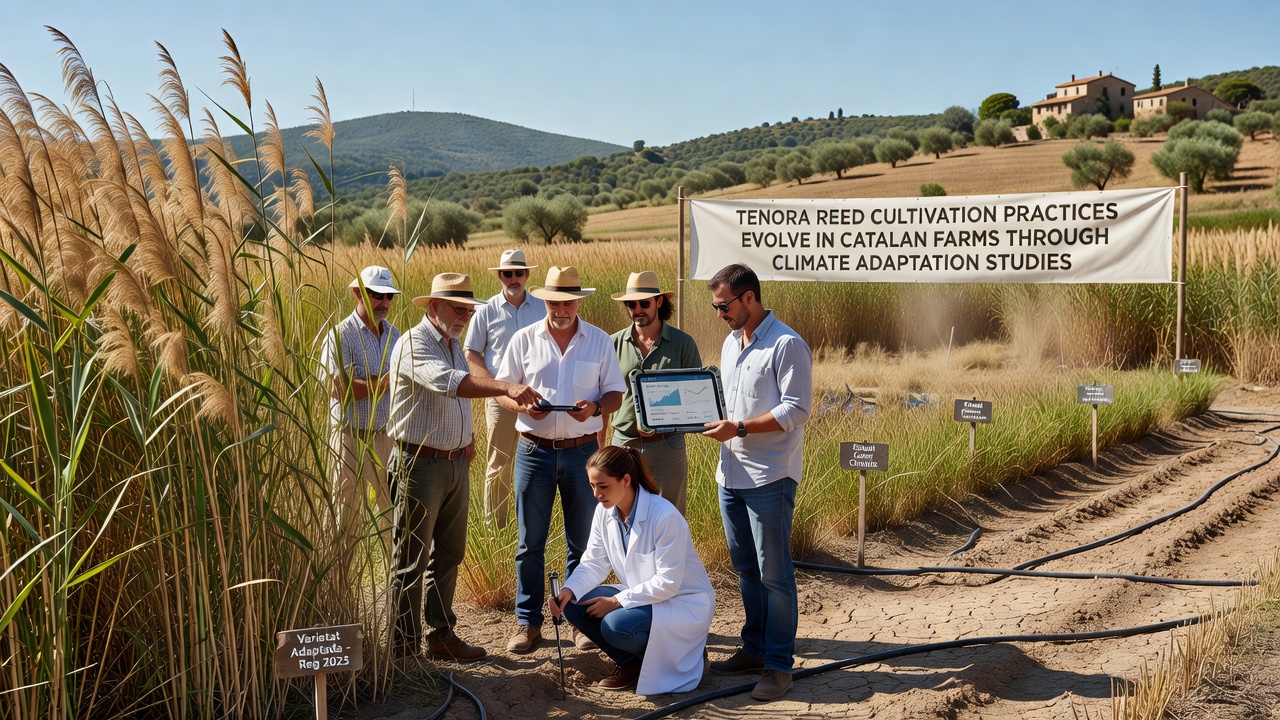
Additional data released in September 2026 from ongoing plots in the Baix Llobregat region confirmed that intercropping with shallow-rooted aromatic herbs further stabilizes microclimates around reed bases, reducing midday leaf temperatures by up to 3.5 degrees Celsius. These herbs also attract pollinators that support nearby fruit orchards, creating integrated systems that spread economic risk across multiple crops. Researchers note that genetic sequencing of surviving stands has identified three distinct haplotypes showing superior recovery after prolonged dry periods, and propagation material from these lines is now distributed through certified nursery networks serving 47 farms. Training sessions organized by the Catalan Department of Agriculture have reached over 180 growers, covering sensor calibration, data interpretation, and record-keeping requirements tied to regional sustainability certifications.
Integration with Broader Agricultural Policy
Support programs administered through the European Union's Common Agricultural Policy allocate funding for precision agriculture tools when farms demonstrate measurable improvements in water-use efficiency, and several Catalan reed operations have qualified for grants that offset the cost of soil mapping and automated valve systems. Reports from the European Environment Agency highlight similar adaptation patterns in other Mediterranean reed-dependent industries, providing comparative benchmarks that Catalan practitioners consult when refining their own schedules. Linkages between reed quality metrics and tenora instrument makers remain direct, since variations in wall thickness directly influence acoustic response, prompting collaborative testing between farms and instrument workshops to verify that adapted reeds meet tonal standards established over decades.
Conclusion
Continued monitoring through 2027 will track whether these cultivation adjustments sustain reed supply volumes sufficient for both local artisan demand and emerging export interest, while additional research examines potential expansion into higher-elevation sites where cooler nights may offset daytime heat. The documented evolution of practices reflects systematic application of climate data to longstanding agricultural routines, and the resulting methods continue to be refined through iterative field observations across Catalan growing zones.